





Contents

Imballaggi e contenitori Industria
The Practical Guide to Surface Science (2026)

?s=100&d=m
Written by
No biography added yet.
Read More
?s=100&d=m
Reviewed by
N/A
No biography added yet.
Read More
?s=100&d=m
Written By

No biography added yet.

?s=100&d=m
Reviewed By

N/A N/A

No biography added yet.

This is a practical guide to Surface Science for researchers working in the Packaging and Containers Industry.

In this all-new guide you’ll learn all about:

  • Crucial surface science principles
  • The significance of surface science measurements for the Packaging and Containers industry
  • Applicable ASTM Standards & Guidelines

Let’s dive right in.

packaging containers

Executive Summary

What it covers: A practical surface-science guide for packaging and container teams covering contact angle (static + advancing/receding), surface tension (static + dynamic), surface energy, and sliding angle—and how each measurement connects to packaging performance. It ties these measurements to real packaging problems like oil/grease resistance, moisture sensitivity of bio-films, leak risk, ink removal for recycling, and label adhesion on curved packs.
Key insights: For real packaging surfaces (porous papers, coated films, treated plastics), single “static” angles can be misleading—dynamic advancing/receding angles and time-stamped measurements better capture hysteresis, roughness, contamination, and absorption effects. Use Young–Laplace fitting for more consistent droplet-shape analysis when axisymmetry holds, and use dynamic surface tension when fast interface changes drive outcomes (dispensing, foaming, wetting/leveling, drying/coating).
Business value: Better control of wettability and interfacial behavior improves coating holdout, grease/water resistance, print quality, and adhesive/label performance—reducing scrap, customer complaints, and line downtime. Surface measurements also support circularity goals by improving de-inking/cleaning performance in mechanical recycling and accelerating development of compostable or bio-based packaging films with predictable moisture behavior.
Standards to follow: Follow TAPPI T 458 / ASTM D724 for porous paper and paperboard wettability using fixed-time (time-stamped) angle-of-contact reporting for sizing and holdout QC. For broader, reproducible wettability/SFE workflows and dynamic angles/roll-off behavior, align methods with the ISO 19403 series, and document controlled conditioning, timestamps, and pass/fail data-quality rules to keep QC trending comparable.
Bottom line: This is a practical, packaging-focused playbook for choosing the right surface measurement, running it in a repeatable way, and translating the numbers into decisions that improve barrier performance, print/recycle outcomes, and adhesion—while supporting sustainability-driven material shifts. It helps teams move from trial-and-error to measurable, spec-driven surface control across paper, films, coatings, and finished packs.

Chapter 1: Introduction

In today’s packaging and container industry, success is determined by factors such as product quality, user experience, and environmental impact. This can be illustrated through a simple yet detailed example: oil and grease-resistant paper, a crucial component of the modern packaging industry. Despite the hydrophobicity and porosity of the base paper making it unsuitable for packaging purposes, a coating with specific properties is applied to impart hydrophobic and oleophobic characteristics. These papers, derived from plant fibers, are light, flexible, recyclable, and compostable materials. Since they are derived from renewable resources they are compatible to environment. Consequently, these papers have become indispensable in the area of packaging, embodying the industry’s commitment to both efficiency and sustainability.

In the preparation of oil and grease-resistant papers, surface properties such as contact angle, sliding angle, surface tension, and surface energy play a crucial role. Therefore, the success of the packaging and container industries lies in how efficiently one can apply these surface properties to produce papers with the desired characteristics.

We use the following surface properties to understand the behavior of Packaging and Containers products and improve their quality.

Chapter 2: Contact Angle Measurement

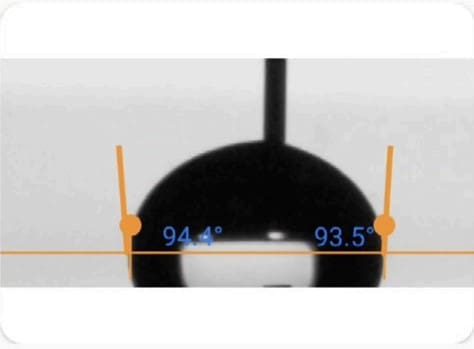
The contact angle quantifies the wettability of a surface by representing the angle between a liquid’s surface and a solid surface.
Dropletlab Research

Sample Image taken from Droplet Lab Tensiometer.

Young – Laplace Method

Metodo polinomiale

Dynamic Contact Angle

Ideally, when we place a drop on a solid surface, a unique angle exists between the liquid and the solid surface. We can calculate the value of this ideal contact angle (the so-called Young’s contact angle) using Young’s equation. In practice, due to surface geometry, roughness, heterogeneity, contamination, and deformation, the contact angle value on a surface is not necessarily a single consistent value but rather falls within a range. The upper and lower limits of this range are known as the advancing and receding contact angles, respectively. The values of advancing and receding contact angles for a solid surface are highly sensitive to many parameters, such as temperature, humidity, homogeneity, and minor contamination of the surface and liquid. For example, the advancing and receding contact angles of a surface can differ at different locations.

Dynamic Contact Angle versus Static Contact Angle

Practical surfaces and coatings naturally show contact angle hysteresis, indicating a range of equilibrium values. When we measure static contact angles, we get a single value within this range. Solely relying on static measurements poses problems, like poor repeatability and incomplete surface assessment regarding adhesion, cleanliness, roughness, and homogeneity.

In practical applications, we need to understand how easily a liquid spreads (advancing angle) and how easily it is removed (receding angle), such as in painting and cleaning. Measuring advancing and receding angles offers a holistic view of liquid-solid interaction, unlike static measurements, which yield an arbitrary value within the range.

This insight is crucial for real-world surfaces with variations, roughness, and dynamics, aiding industries like cosmetics, materials science, and biotechnology in designing effective surfaces and optimizing processes.

Learn how Contact Angle measurement is done on our Tensiometer

For a more complete understanding of Contact Angle measurement, read our Contact Angle measurement: The Definitive Guide

Open Benchmark Data: Contact Angle & Surface Energy

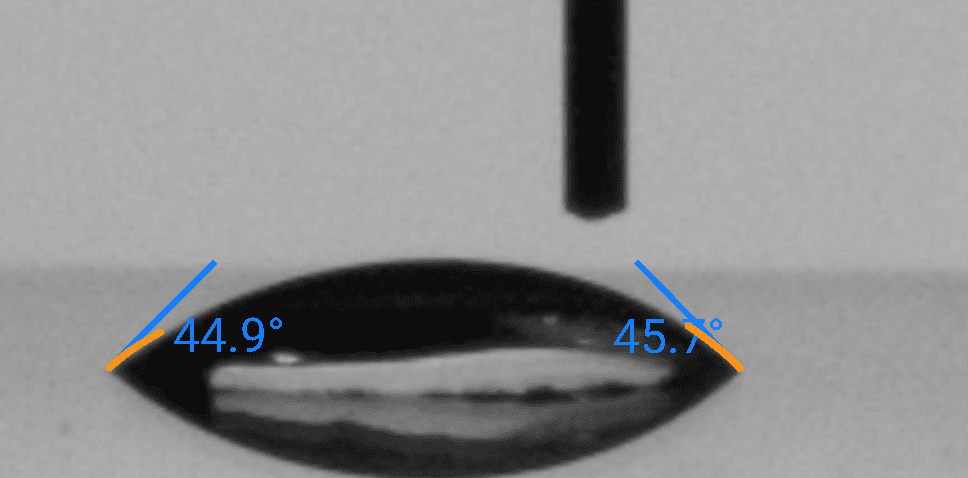
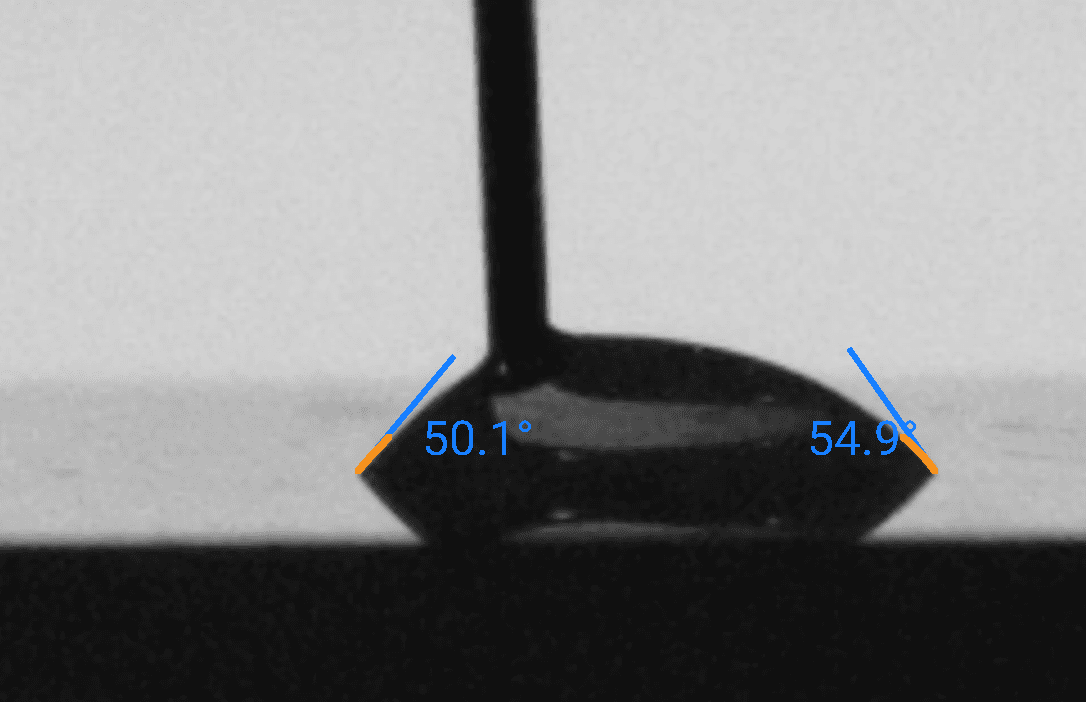
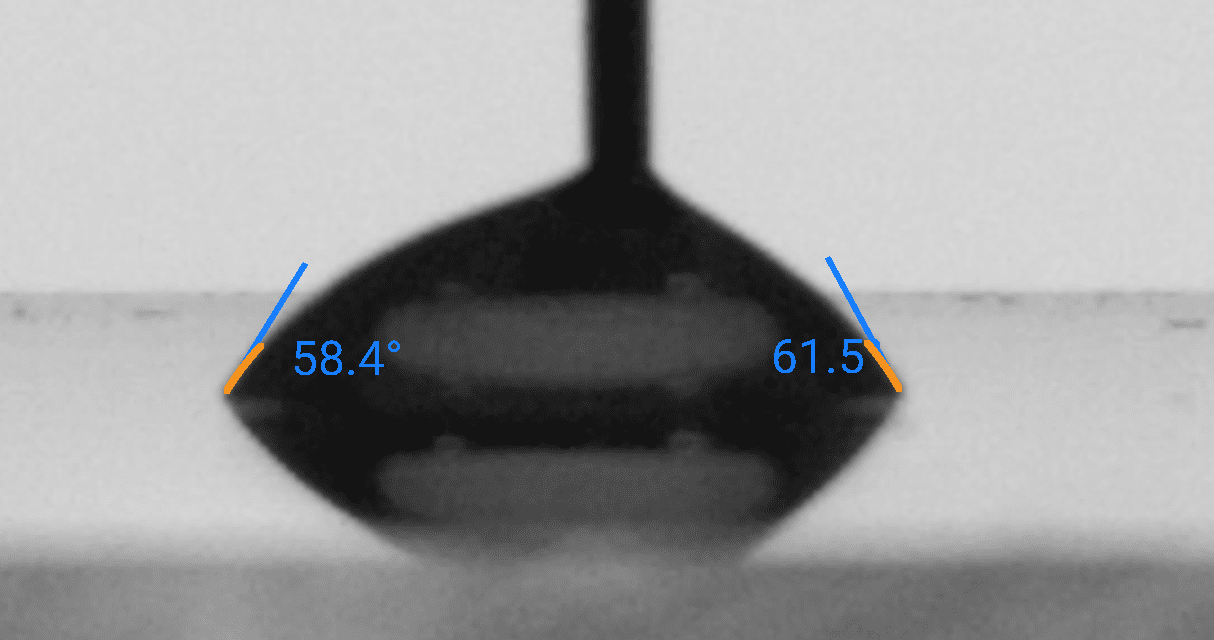
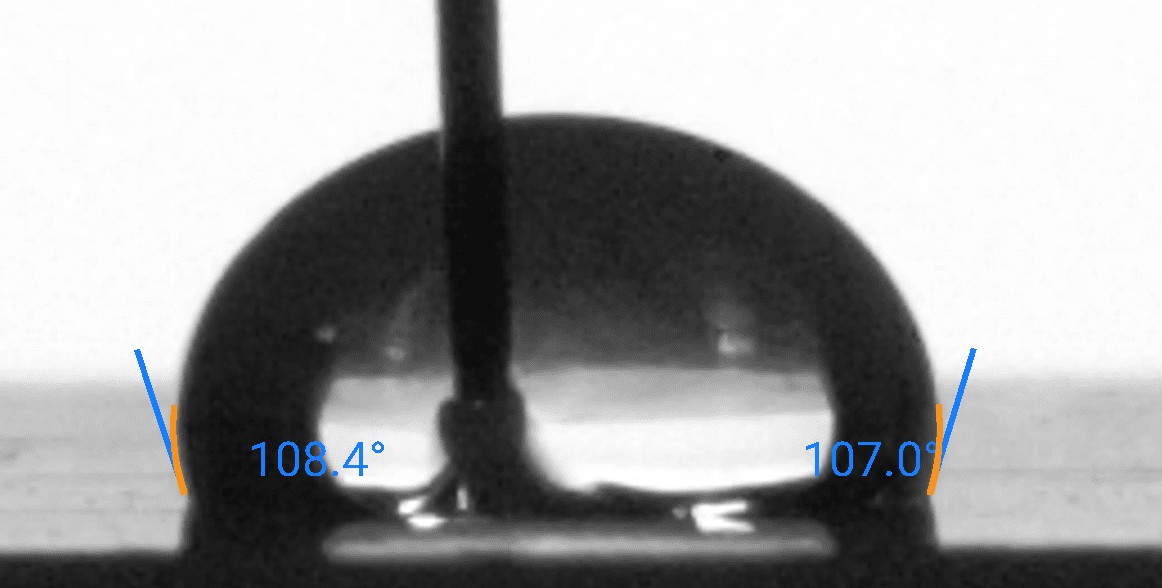
These reference measurements show how deionized water wets four standard substrates measured with the Droplet Lab Dropometer. Use them as visual and numerical benchmarks when you're checking your own sample preparation, treatments, and chemistry.

Full contact angle and surface energy datasets (including additional liquids and statistics) are available on our dataset hub.

Glass - DI Water
Glass - DI Water
Nylon - DI Water
Nylon - DI Water
PMMA - DI Water
PMMA - DI Water
Teflon - DI Water
Teflon - DI Water

The droplet images above are taken from the same benchmark series as our open dataset. For each substrate and probe liquid we report:

● Advancing and receding contact angles (and hysteresis)
● Derived surface energy (SFE) values based on multi-liquid measurements
● Measurement conditions, uncertainties, and sample preparation details

Comparing your own droplet shapes and angles against these references is a fast way to spot contamination, treatment drift, or unexpected changes in wettability.

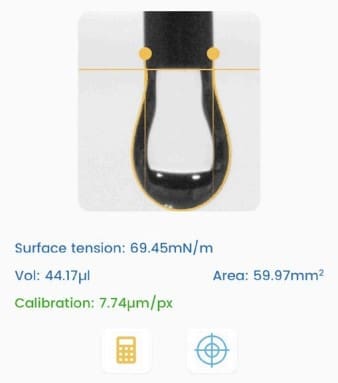
Chapter 3: Surface Tension Measurement

This property measures the force that acts on the surface of a liquid, aiming to minimize its surface area.

Misurazione della tensione superficiale

Sample Image taken from Droplet Lab Tensiometer

Dynamic Surface Tension

Dynamic surface tension differs from static surface tension, which refers to the surface energy per unit area (or force acting per unit length along the edge of a liquid surface).

Static surface tension characterizes the equilibrium state of the liquid interface, while dynamic surface tension accounts for the kinetics of changes at the interface. These changes could involve the presence of surfactants, additives, or variations in temperature, pressure, and composition at the interface.

When to use Dynamic Surface Tension Measurement

Dynamic surface tension is essential for processes that involve rapid changes at the liquid-gas or liquid-liquid interface, such as droplet and bubble formation, coalescence (change in surface area), the behavior of foams, and the drying of paints (change in composition, e.g., evaporation of solvent). It is measured by analyzing the shape of a hanging droplet over time.

Dynamic surface tension applies to various industries, including cosmetics, coatings, pharmaceuticals, paint, food and beverage, and industrial processes, where understanding and controlling the behavior of liquid interfaces is essential for product quality and process efficiency.

Learn how Surface Tension measurement is done on our Tensiometer

For a more complete understanding of Surface Energy measurement, read our Surface Tension measurement: The Definitive Guide

Chapter 4: Surface Energy Measurement

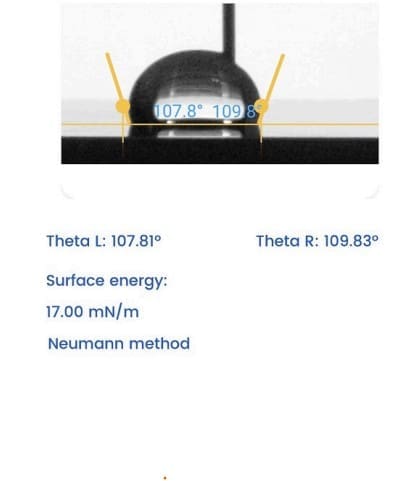
Surface energy refers to the energy required to create a unit area of a new surface.
231

Sample Image taken from Droplet Lab Tensiometer

Learn how Surface Energy measurement is done on our Tensiometer

For a more complete understanding of Surface Energy measurement, read our Surface Energy measurement: The Definitive Guide

For benchmark contact angle and surface energy values on glass, nylon, PMMA, and Teflon, see the Open Benchmark Data panel above or visit our Dataset Hub for full CSV downloads.

Chapter 5: Sliding Angle Measurement

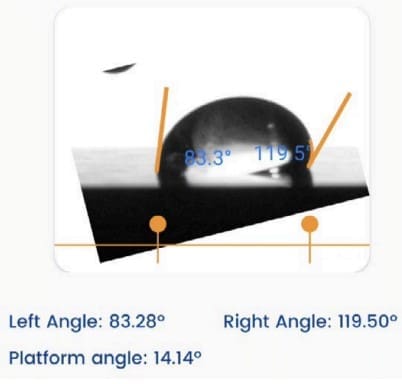
The sliding angle measures the angle at which a liquid film slides over a solid surface. It is commonly employed to assess the slip resistance of a surface.

sliding angle 1

Sample Image taken from Droplet Lab Tensiometer

Learn how Sliding Angle measurement is done on our Tensiometer

For a more complete understanding of Sliding Angle measurement, read our Sliding Angle Measurement: The Definitive Guide

Chapter 6: Real-World Applications

Within the Packaging and Containers industry, several case studies exemplify the advantages of conducting surface property measurements.

Soyhull-Derived Biodegradable Packaging Films: Using Water Contact Angle to Quantify Surface Wettability and Moisture Sensitivity

Due to their inability to biodegrade, petroleum-based plastics pose significant environmental challenges by disrupting aquatic, marine, and terrestrial ecosystems. Additionally, the widespread presence of microplastics and nanoplastics induces serious health risks for humans and animals. These pressing issues create an urgent need for designing and developing eco-friendly, biodegradable, renewable, and non-toxic plastic alternatives. To this end, agro-industrial byproducts such as soyhulls, which contain 29–50% lignocellulosic residue, are handy. This study extracted lignocellulosic residue from soyhulls using alkali treatment, dissolved it in ZnCl2 solution, and crosslinked it with calcium ions and glycerol to create biodegradable films. The film formulation was optimized using the Box–Behnken design, with response to tensile strength (TS), elongation at break (EB), and water vapor permeability (WVP). The optimized films were further characterized for color, light transmittance, UV-blocking capacity, water absorption, contact angle, and biodegradability. The resulting optimized film demonstrated a tensile strength of 10.4 ± 1.0 MPa, an elongation at break of 9.4 ± 1.8%, and a WVP of 3.5 ± 0.4 × 10⁻¹¹ g·m−1·s−1·Pa−1. Importantly, 90% of the film degrades within 37 days at 24% soil moisture. This outcome underscores the potential of soyhull-derived films as a sustainable, innovative alternative to plastic packaging, contributing to the circular economy and generating additional income for farmers and allied industries.

Role of the Droplet Lab Goniometer

The authors used a Droplet Lab Dropometer to measure water contact angle (WCA) on the optimized soyhull-extract (SHE) film—directly quantifying the film’s surface wetting behavior (hydrophilicity/hydrophobicity), which is central to packaging performance where moisture exposure, surface interactions, and barrier behavior matter. The paper explicitly reports that WCA was measured using a Dropometer (Droplet Lab, Markham, ON, Canada) and evaluated over time (0, 10, 20, 30 s) to observe changes after droplet placement.


Key Findings

  • Optimized packaging film performance: The optimized film achieved TS = 10.4 ± 1.0 MPa, EB = 9.4 ± 1.8%, and WVP = 3.5 ± 0.4 × 10⁻¹¹ g·m−1·s−1·Pa−1.
  • Validated optimization approach: Predicted vs. experimental TS/EB/WVP were statistically consistent (no significant differences reported).
  • Surface wettability quantified by Dropometer: The film surface is hydrophilic (WCA < 90°) and WCA decreased from ~76.9° (0 s) to ~49.2° (30 s), indicating increasing wetting/spreading/interaction with water over time.
  • Relevance vs conventional plastics: The authors note LDPE is more hydrophobic (reported WCA ~100.7°), and they discuss pathways (e.g., incorporating hydrophobic components like lignin/waxes) to improve water resistance.

End-of-life advantage: The film shows rapid biodegradation (reported ~90% degradation within 37 days at 24% soil moisture in the abstract).

Why It Matters

For packaging teams developing bio-based film structures, contact angle is a fast, quantitative way to screen whether a new film will behave more like a moisture-sensitive, hydrophilic biopolymer (potentially needing coatings/lamination) versus a more water-repellent packaging surface. Here, the Dropometer WCA time-series reveals that the soyhull-derived film wets increasingly over 30 seconds—information that can directly inform coating selection, surface treatments, and QC specs when targeting real-world humidity/water exposure while still benefiting from strong biodegradability and sustainability claims.

Method Snapshot

Optimized soyhull-extract (SHE) biodegradable film; sessile water droplet contact angle measured with a Droplet Lab Dropometer (0.05 µL precision dropper) and analyzed with sessile-drop software; WCA tracked at 0/10/20/30 s after droplet placement (static sessile-drop measurement; exact test temperature and liquid surface tension not reported).

Data Note

  • Time-resolved contact-angle measurements at 0, 10, 20, and 30 seconds and reported angles (76.9°, 58.3°, 52.7°, 49.2°) illustrating increased hydrophilicity over time
Figure

Citation (APA Format)

Regmi, S., Paudel, S., & Janaswamy, S. (2024). Development of eco-friendly packaging films from soyhull lignocellulose: Towards valorizing agro-industrial byproducts. Foods, 13(24), 4000. https://doi.org/10.3390/foods13244000

View Publication →

Loss of Package Sterility due to Leaker Formation

Challenge: The sterility of aseptic packages can be compromised during storage and distribution due to rough or improper handling.

Solution: In one study, scientists focused on determining the threshold pressure required to create a leak. They observed significantly lower threshold pressures in the case of low surface tension liquids, such as safranin red dye, compared to high surface tension liquids, like distilled water. This insight allows manufacturers to proactively avoid conditions that could lead to leakage issues. A tensiometer like Droplet Lab's Dropometer precisely measures surface tension, enabling manufacturers to identify and understand how different liquids interact with packaging materials. By providing accurate data on surface tension, it helps in assessing the susceptibility of packaging to leaks and supports the development of more robust packaging solutions, thus maintaining package sterility.

Loss of Package Sterility due to Leaker Formation

Removal of Printing Ink in Mechanical Recycling Process

Challenge: Printing ink in flexible packaging materials can cause contamination in the mechanical recycling process.

Solution: The removal of printing ink residue from the surface of flexible plastic packaging can be achieved through detergency, mechanical, and chemical cleaning processes. In this context, contact angle measurements are invaluable for studying the interaction between the polymer and surfactant. These measurements are highly effective in comparing the wetting behavior of surfactants on various printing ink systems and non-printed film surfaces.

Removal of Printing Ink in Mechanical Recycling Process

Improving Label Adhesion on Curved Surfaces

Challenge: There was a big issue with label adhesion in packages that have curved surfaces, resulting in peeling and poor aesthetics.

Solution: The manufacturer applied the surface tension measurements that helped in the selection of label materials with appropriate adhesive properties for curved surfaces. These optimized properties of adhesives ensured strong and lasting label adhesion, enhancing the overall visual appeal of the packaging.

Improving Label Adhesion on Curved Surfaces

We are your partners in solving your Business & Technological challenges

If you are interested in implementing these or any other applications, please contact us.

Chapter 7: Standards and Guidelines

In an industry where precision reigns supreme, how can Packaging and Containers manufacturers ensure their products withstand scrutiny? The answer lies in standards and guidelines: the compass that guides them through the complex maze of quality and performance.

TAPPI T 458 — Surface Wettability of Paper (Angle-of-Contact Method) / ASTM D724

What it is

A standardized sessile-drop contact angle method for porous paper/paperboard surfaces that quantifies resistance to wetting at a defined early time and how that apparent wettability changes over time. It’s commonly used as a practical, time-stamped wettability/absorption index for sizing control and process runnability.

When to use it

Sizing / holdout QC for printing, converting, and aqueous coating

Use fixed-time angles to detect lot-to-lot or roll-to-roll drift before it becomes press/coater waste.

Non-uniformity troubleshooting (directional + sidedness)

Use MD vs CD and wire vs felt sampling to identify where wetting/penetration behavior differs across the web.

In-scope / Out-of-scope

In scope
  • Porous paper and paperboard grades where wetting and penetration occur simultaneously.
  • Sessile-drop contact angle measured at defined timestamps (fixed-time reporting).
  • Initial + time-evolution reporting (early-time angle plus later-time angle and/or a rate-of-change indicator).
  • Controlled sample conditioning/environment per lab SOP (commonly aligned to standard paper conditioning atmospheres).
Out of scope
  • Universal “good/bad” cutoffs that transfer across different porous grades without site/grade calibration.
  • Mass-based absorbency / water uptake (use Cobb / TAPPI T 441 or similar when you need absorption by mass).
  • Advancing/receding angles, hysteresis, or dynamic surface tension characterization requirements.
  • Cases where the drop fully absorbs before the required timestamp: report as “not measurable at X s” rather than forcing a number (use a separate early-time/high-speed internal metric if needed).

Minimum you must report (checklist)

  • Substrate description: grade/structure, basis weight (or caliper), sizing/coating type if known, and side + orientation (wire/felt; MD/CD) where applicable.
  • Conditioning conditions: temperature/RH (and conditioning time/atmosphere).
  • Test liquid(s): identity (DI water baseline if used) and liquid temperature (if controlled).
  • Drop volume + dispense details: volume, delivery method (needle/tip), and any height/placement controls.
  • Defined timestamps: the exact capture times (e.g., 5 s and 60 s) and how “time zero” is set (e.g., first frame after dispense).
  • Reported metrics: θ@5s, θ@60s, and Δθ(5→60s) (or your defined change metric).
  • Replicates + statistics: replicate count per zone and summary statistic (median or mean) plus variability (IQR or SD).
  • Data-quality rules: exclusion criteria (distorted footprint/failed edge detection, sheet not flat/secured, drop disappears early) and how exclusions are recorded.

On porous sheets the apparent contact angle is time-dependent due to simultaneous wetting and penetration, so angles without a timestamp are not comparable. Automating fixed-time capture improves repeatability, but pass/fail limits must be calibrated per grade family against real print/coating/converting outcomes.

How to interpret results (guardrails)

  • Only compare like-for-like: same liquid, drop volume, conditioning, optics/settings, and timestamps—treat angles as protocol-specific indices, not universal constants.
  • θ@5s (early-time index): lower values generally indicate faster early wetting (less resistance/holdout), while higher values indicate more early-time resistance under that SOP.
  • Δθ(5→60s) (change-over-time index): a larger magnitude drop in angle typically signals faster evolution (often penetration/absorption-dominated on porous sheets), but confirm root cause with complementary process/context data when needed.
  • Variability and deltas are actionable signals: spikes in IQR/SD, strong MD–CD differences, or wire–felt differences often predict non-uniform converting/printing behavior even when the overall median looks “on target.”

Now It’s Your Turn

We hope this guide showed you how to apply surface science in the Packaging and Containers industry.

Now we’d like to turn it over to you: 

Feel free to leave a comment below—we’d love to hear from you.

Leave a Reply

Your email address will not be published. Required fields are marked *


Scarica l'esperimento